PoolDilutionR
Calculate Gross Biogeochemical Flux Rates from Isotope Pool Dilution Data
Pool dilution is a isotope tracer technique wherein a
biogeochemical pool is artifically enriched with its heavy isotopologue
and the gross productive and consumptive fluxes of that pool are
quantified by the change in pool size and isotopic composition over time.
This package calculates gross production and consumption rates from
closed-system isotopic pool dilution time series data. Pool size
concentrations and heavy isotope (e.g., 15N) content are measured over time
and the model optimizes production rate (P) and the first order rate
constant (k) by minimizing error in the model-predicted total pool size,
as well as the isotopic signature. The model optimizes rates by weighting
information against the signal:noise ratio of concentration and heavy-
isotope signatures using measurement precision as well as the magnitude of
change over time. The calculations used here are based on von Fischer and
Hedin (2002)
PoolDilutionR

An R package for easy calculation of rates from isotope pool dilution experiments.
To load the package, type library(PoolDilutionR).
Overview
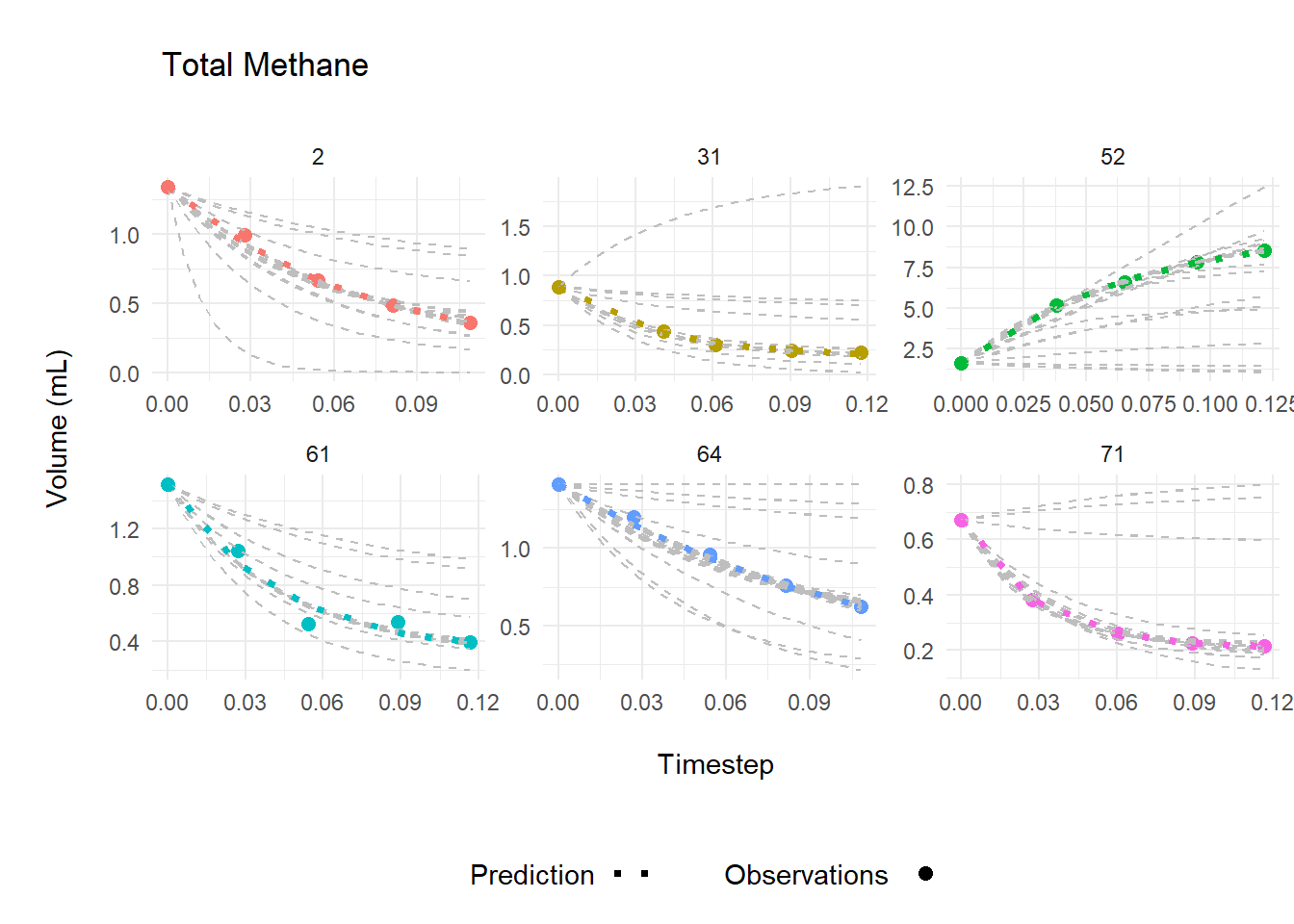
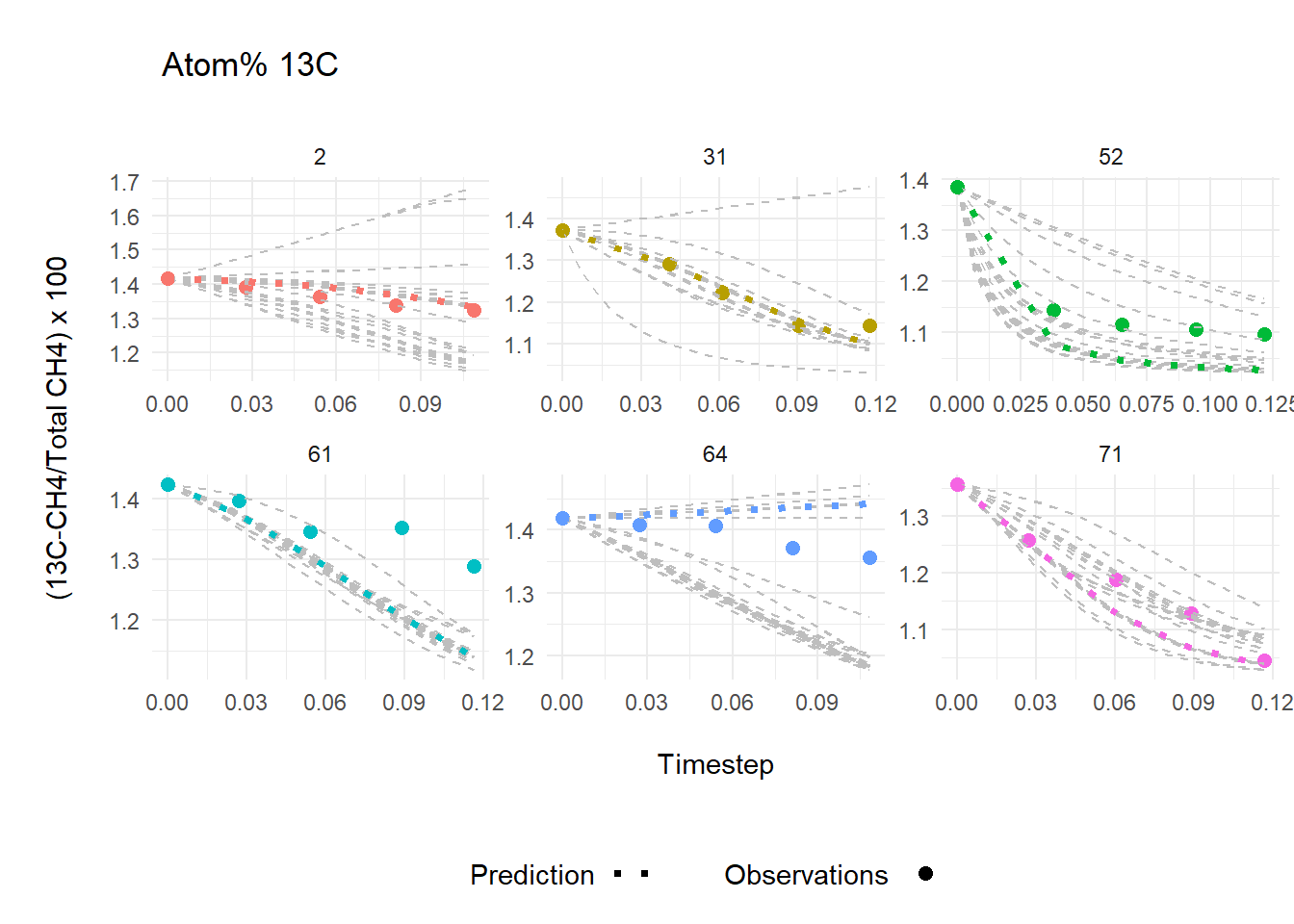
This code calculates gross production and consumption from pool dilution time series data. Target pool size (e.g., methane, nitrate) and isotopic composition (e.g., 13C, 15N) are measured from a closed system over time, the model optimizes production rate (P) and the first order rate constant (k), by minimizing error in the model-predicted total pool size (unit volume or mass), as well as the isotopic signature. The optimization weighs the signal:noise ratio of pool and signatures using measurement precision as well as the magnitude of change over time. The calculations used here are based on von Fischer and Hedin 2002, 10.1029/2001GB001448, with some modifications (manuscript link pending).
Original code was written for data collected on a Picarro CRDS equipped with a SSIM2 unit.
Inputs
Time series data of pool and isotopic composition.

Functions
Prediction of P, gross production rate, and k, first order rate constant for consumption.
`pred <- pdr_predict(time = dat$time_days,
                      m0 = dat$cal12CH4ml[1] + dat$cal13CH4ml[1],
                      n0 = dat$cal13CH4ml[1],
                      P = P,
                      k = result$par["k"],
                      pool = "CH4")`
Optimization of predictions using data quality and deviation in pool size (Nm) and isotopic composition (Nd) over time.
`result <- pdr_optimize(time = dat$time_days,
                      m = dat$cal12CH4ml + dat$cal13CH4ml,
                      n = dat$cal13CH4ml,
                      Nm = dat$Nm,
                      Nd = dat$Nd,
                      pool = "CH4",
                      params = params)`
Output
Optimized rates based on total pool size and atom percent composition.